


Exhibition Printing in Belgium: The Complete Guide to Successful Events
Taking part in an exhibition or professional event is a powerful way to grow your business, meet new clients and strengthen your brand image. In a competitive environment where every company is trying to stand out, the quality of your exhibition materials makes all the difference.
Well-planned exhibition printing is not just about “being present”: it turns your stand into a real business tool. Every printed material should attract attention, deliver a clear message and encourage action.
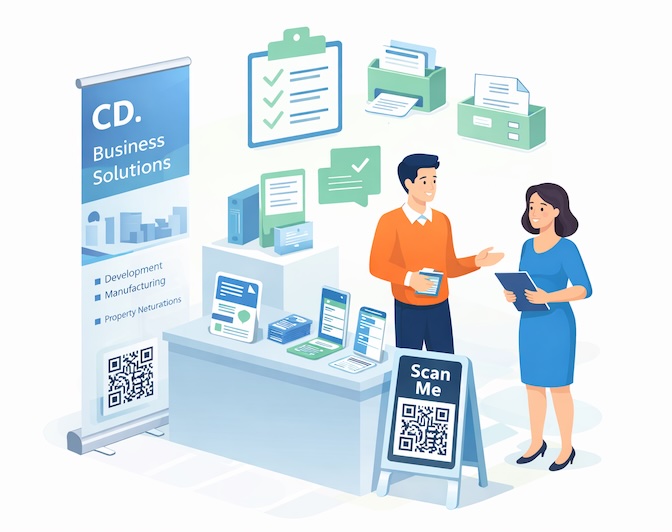
This guide helps you prepare your exhibition materials and optimise your presence at events. Short on time? Our experts support you from design to event printing production. Contact us for a free quote.
Why is exhibition printing crucial for your event?
At exhibitions and trade shows, visitors make decisions very quickly. In just a few seconds, they decide whether your stand deserves their attention.
Your printed materials for events help you to:

Create immediate visual impact

Structure your message

Strengthen your credibility

Generate qualified leads

Facilitate post-event follow-up
High-quality exhibition printing directly increases your chances of turning visitors into business opportunities.
Essential materials for an effective exhibition stand
1. Visual materials to attract attention
These are the elements that catch attention from a distance:
- Roll-ups / banner stands
- Large-format banners
- Backdrops (display walls)
- Promotional totems
- Exhibition stand structures
👉 They must be readable within 3 seconds and understandable from several metres away.
2. Sales materials to convince
Once visitors are on your stand:
- Brochures
- Leaflets
- Flyers
- Product catalogues
- Technical data sheets
👉 The objective: clearly present your offer and encourage further engagement.
3. Contact materials to convert
Once visitors are on your stand:
- Business cards
- QR code materials
- Promotional vouchers
- Contact forms or invitations
👉 These materials help extend the relationship after the event.
4. Signage to structure your stand
Once visitors are on your stand:
- Information panels
- Directional signage
- Product labels
- Stickers
👉 Clear organisation improves the visitor experience and enhances your brand image.
Complete checklist: preparing your exhibition printing
Before each event, make sure you have:
- several roll-ups
- 300 to 1000 flyers depending on attendance
- 100 to 300 brochures
- at least 200 business cards
- Clear signage for your stand
- Materials with QR codes (website, catalogue, booking)
👉 Planning extra quantities is always recommended to avoid running out.


Common mistakes to avoid
Some mistakes can significantly reduce your impact:
- ❌ Too much text on your materials
- ❌ Unclear or overly complex messaging
- ❌ Poor print quality
- ❌ Visuals that are hard to read from a distance
- ❌ No call to action
- ❌ Insufficient quantities
👉 Effective exhibition materials must be simple, clear and results-driven.
Print quality: a key factor for credibility
Paper and materials
- Thick paper for cards and brochures
- Rigid materials for signage
- Appropriate finishes
Printing
- Sharp, high-resolution images
- Consistent and accurate colours
- Optimal readability from a distance
Finishes
- Matte or glossy lamination
- Spot or full varnish
- Custom cutting
👉 High-quality finishes reinforce trust and perceived value.
Adapting your materials to the type of event
B2B exhibitions
- Detailed materials
- Strong value proposition
- Expertise highlighted
Consumer events
- Strong visual impact
- Simple messages
- Quick-to-read materials
Conferences
- Educational materials
- Clear summaries
What budget and lead times should you plan for exhibition printing?
The budget depends on your objectives and expectations.
Typical ranges:
- Custom badges
- Flyers: low cost, wide distribution
- Brochures: medium cost, strong impact
- Roll-ups: moderate investment, high visibility
- Full set of materials: overall budget to anticipate
👉 It is better to invest in fewer materials, but of higher quality.
For a successful event:
- Plan production at least 1 to 2 weeks in advance
- Check your files before printing
- Organise delivery
- Prepare a backup plan in case of unexpected issues
👉 Proper planning ensures a smooth and professional presence.
Integrating a responsible approach
Companies are increasingly attentive to their environmental impact:
- Recycled or certified paper
- Eco-friendly inks
- Reusable materials
- Reducing unnecessary print volumes
👉 A responsible approach also strengthens your brand image.
Which materials are essential for an exhibition?
Roll-ups, brochures, flyers, business cards and signage are essential. They help you attract, inform and convert visitors.
How many materials should you prepare?
It depends on attendance, but it is recommended to plan enough for the entire event with a safety margin.
What is the best format for flyers or brochures?
A5 and A4 formats are the most commonly used, depending on the amount of information.
How can printing improve your stand?
By using large visuals, clear messaging, readable materials and interactive elements such as QR codes.
How long does production take?
From a few days to two weeks depending on quantities and finishes.
Why is print quality important?
It directly reflects your brand and influences how visitors perceive your company.
Conclusion
Successful exhibition printing relies on careful preparation, the right materials and flawless quality. Every printed element contributes to your brand image and your ability to convert visitors into real business opportunities.
By preparing your materials methodically and focusing on clarity, readability and quality, you maximise the impact of your presence and your return on investment at your events.
Focus on your event, we take care of the rest. Media Process combines graphic design and printing expertise to deliver exhibition materials ready to perform.